How Many Vehicles Used Indigenous Names? Lots!
Many automakers, like lots of other companies, used Native-American-derived images and names in their branding. As we celebrate Native American Heritage Month this November, Let’s take a look at a few examples.
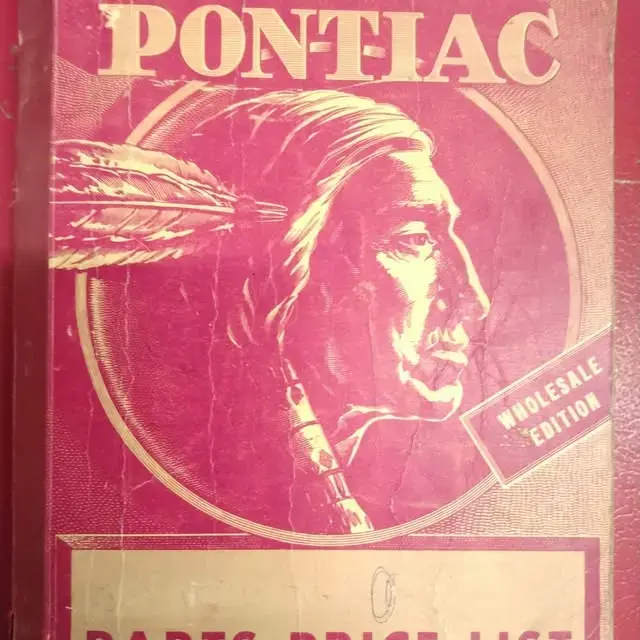
Pontiac
General Motor’s Pontiac line was one of the most prolific users of Native-American-derived images.
Pontiac (c. 1714/20–1769) was an Odawa (Ottawa) leader. He led resistance against the British in the Great Lakes region after the French and Indian War. The British had defeated an alliance of Native American/First Nations people and the French. The indigenous people were unhappy with British policies.
Several Odawa Native American Tribes and First Nations are recognized by the U.S. and Canadian governments.
General Motors introduced the Pontiac make in 1926. The Pontiac line was discontinued in 2009.
GM fully embraced the Native American connection to the Pontiac name. Models included the Chieftan, Star Chief, and Super Chief.
No known images of Pontiac from his time exist. That didn’t stop GM artists from making some up. Various stylized images of Pontiac were used through the 1950s. The Pontiac arrow logo was used until the make’s end in 2009.
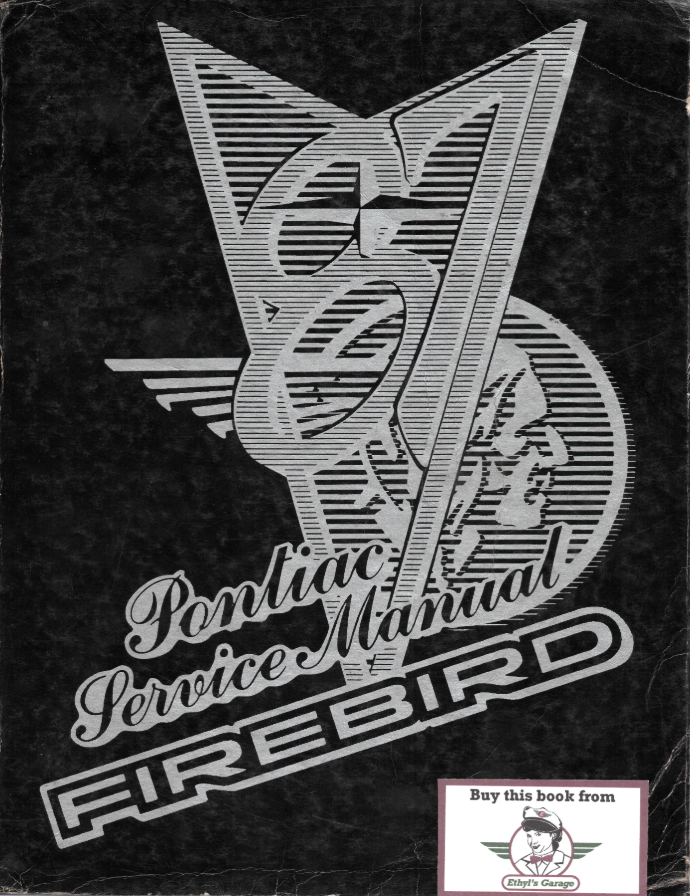
.jpg "Deluxe Hood Ornament, c. 1050 Pontiac Chieftain; Photo Credit: Paul VanDerWerf from Brunswick, Maine, USA, CC BY 2.0 <https://creativecommons.org/licenses/by/2.0>, via Wikimedia Commons")
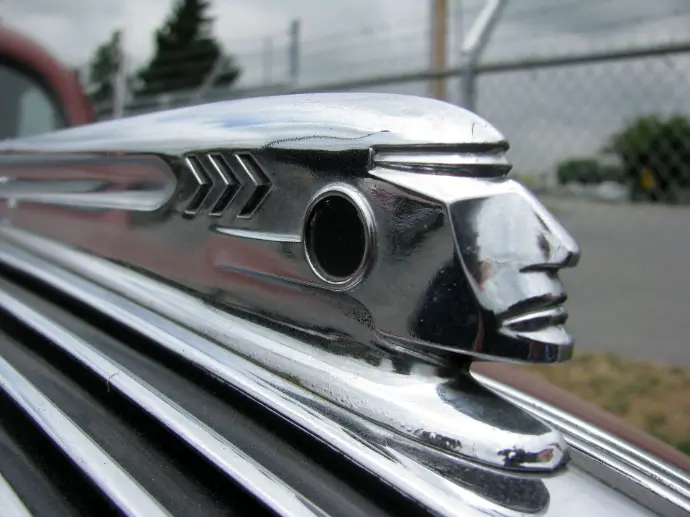


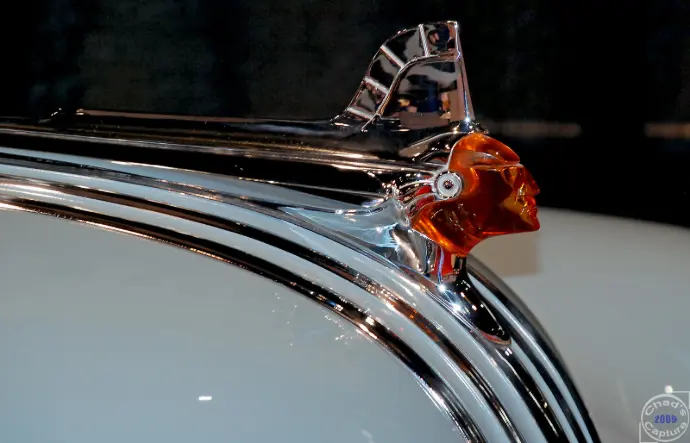
_head_hood_ornament_detail,_from-_1926_Pontiac_Two_Door_Coach_-_Automobile_Driving_Museum_-_El_Segundo,_CA_-_DSC02106_(cropped).jpg "Brass Native American head radiator cap detail, 1926 Pontiac Two-Door Coach Native American Head Hood Ornament Detail, Automobile Driving Museum, El Segundo, CA USA Photo credit: Daderot, Wikimedia Commons")
Pontiac continued to use an arrowhead logo until the make was discontinued in 2010. It used Native-American-related names for model lines and models, including the Chieftain line and Star Chief and Super Chief. The Aztek SUV is a late addition and a bit far from Odawa origins. Also spelled wrong.
Jeep Cherokee & Comanche
American Motors Corporation (AMC) introduced the Jeep Cherokee name with the 1974 model line. It was the first “sport utility vehicle” (SUV).
The Cherokee name comes from the Native American Cherokee people. Some of them are not happy about that.
When Chrysler acquired the Jeep brand from AMC, they continued use of the Cherokee name. Now owned by Stellantis, the name continues in the Grand Cherokee line.
AMC introduced the Comanche pickup version of the Cherokee for the 1986 model year. The Comanche name was continued by Chrysler through the 1992 model year.
The pickup was named after the Native American Comanche people.
Unlike Pontiac, Jeep doesn’t seem to have used Native American imagery with these brands.

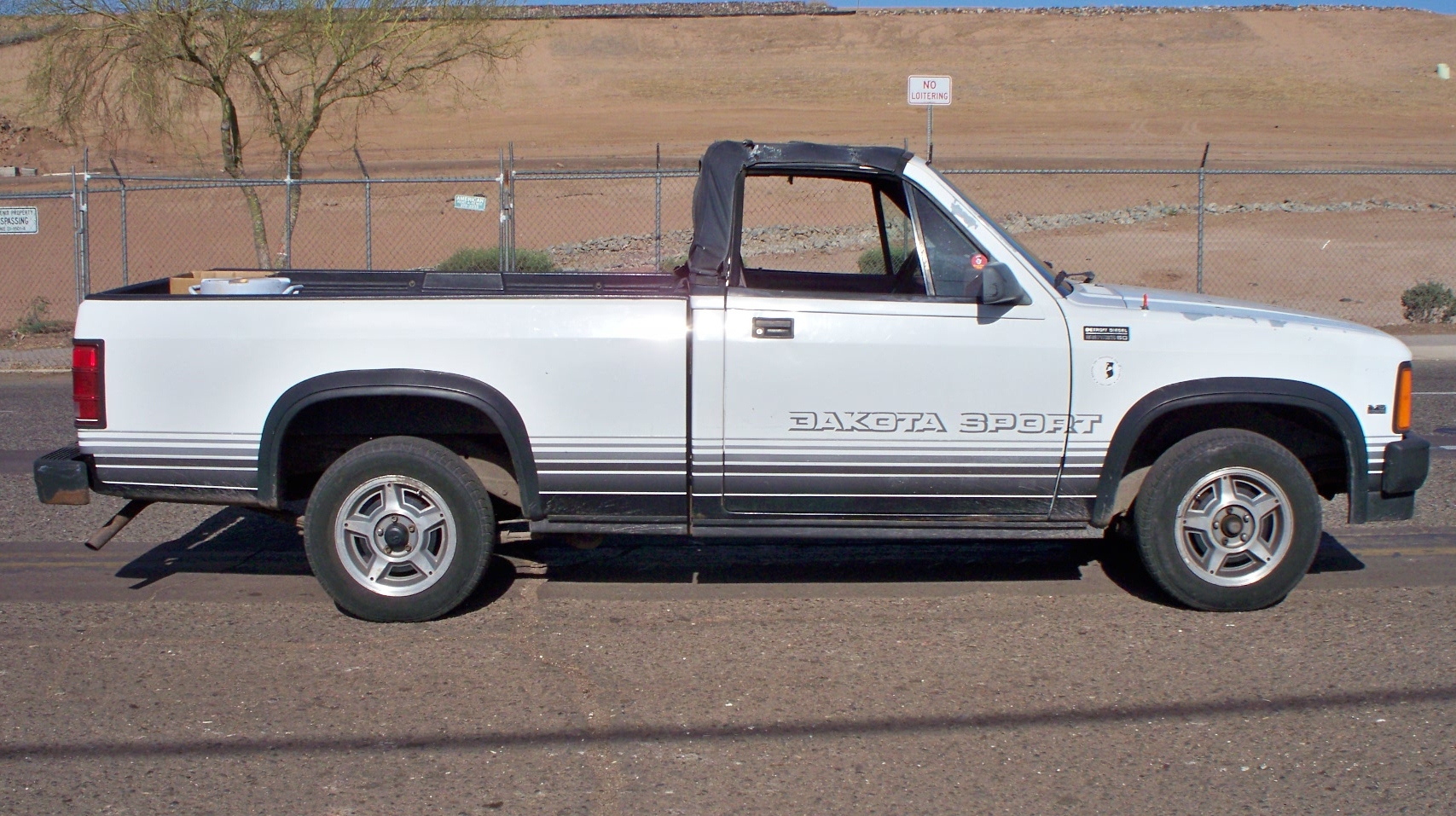
Dodge Dakota
The Dodge (1987–2009), later Ram (2010–2011), Dakota was Chrysler’s mid-sized pickup truck. There are rumors that Stellantis may bring back the Dakota brand, possibly in 2028.
The Dakota people are a group of Native American and First Nations people who are subcultures of the Sioux. The Western Dakota are from the Upper Missouri River region. The Eastern Dakota are from the area that is now the eastern Dakotas, central Minnesota, and northern Iowa.
I couldn’t find the reason behind the Dakota name. In the Dakota language the word Dakota means ally or friend.
My friend Chris grew up in Detriot. Chris’s dad worked in Chrysler’s HR department. Chris ordered a new 1987 Dakota, speced just the way Chris wanted it, to move to Seattle. Chris is still driving it today.
Toyota Tacoma
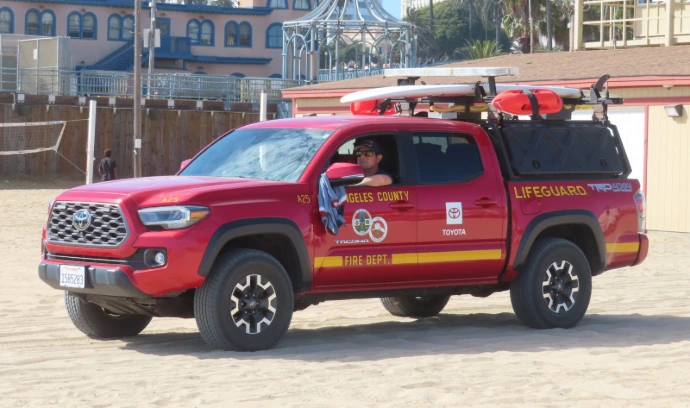
Another mid-size pickup with a Native-American-derived name is the Toyota Tacoma. Toyota introduced the Tacoma in 1995.
Tacoma (also Tahoma) is one of the original indigenous names of Washington State’s Mount Rainier. The mountain is considered a sacred source of water from its glaciers that feed the salmon streams year round.
I don’t know why Toyota picked the name. The mountain is a prominent feature of the landscape. Around here on one of Seattle’s rare clear days we say, “The Mountain’s out.”
I'm guessing Toyota picked the name because it begins with “T” and ends with “A” like Toyota.


Ford Thunderbird
Ford produced the Thunderbird luxury model from 1955 to 2005 with a pause from 1998 to 2001.
The Thunderbird is a common character in North American Indigenous culture. This supernatural bird, considered a power spirit, is a common figure in the cultures of Pacific Northwest Native American/First Nations people. Thunderbird images dating back thousands of years are found in the Southwest United States.
The Ford Thunderbird logo is derived from Southwest Native images. The Thunderbird name was suggested by a Ford employee who had lived in the Southwest.
Other Uses of Indigenous Names in Vehicle Branding
- Volkswagen Taos. The Volkswagen Taos crossover SUV was introduced in the Americans in 2020. The Taos Pueblo in New Mexico is one of the oldest continuously-inhabited places in the United States. Taos is derived from the Spanish word for village. The Taos was first released in China in 2018 as the Tharu. The Tharu people are indigenous to Nepal and Northern India.
- Mazda Navajo. The Mazda Navajo was produced from 1991 to 1994. It was made by Ford for Mazda, based on the Ford Explorer. The Navajo Nation is the second-largest federally recognized tribe in the United States. The majority of Navajo (Diné) people live in the states of Arizona, New Mexico, and Utah.
- Hyundai Kona. The Hyundai Kona crossover SUV was available in North America from 2018 through 2023. Kona is a district of the Island of Hawaiʻi. In Hawaiʻian kona means “leeward,” the dry side of the Island.
- Indian Motorcycles. The Indian Motorcycle Company (originally Hendee Manufacturing Company) produced motorcycles in Springfield, Massachusetts from 1901 to 1953. Polaris Industries purchased the brand in 2011. The Indian Chief was one of Indian’s most popular models. Polaris revived the Indian brand with the retro styled Chief Classic (2014–2018), Chief Vintage (2014–2020), Super Chief (introduced in 2022), Chief Dark Horse (introduced in 2016), Chieftain Dark Horse (introduced in 2016), and Chieftain Limited (introduced in 2017). In October, 2025, Polaris announced that it planned to sell a majority share in Indian Motorcycles to the venture-capital firm Carolwood LP.
